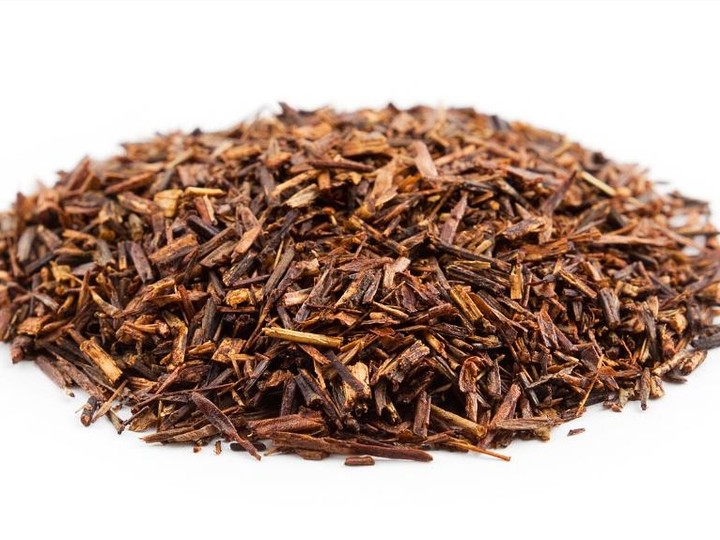
South African rooibos leaf, wild-harvested single-estate
Single-estate Cederberg rooibos — from the one place on Earth the name legally means.
| Origin | Confirmed and legally significant: rooibos is a genuinely GI/PDO-protected term restricted to the Cederberg region — South Africa protected the names 'rooibos' and 'red bush' domestically in 2013, and the EU granted rooibos full Protected Designation of Origin (PDO) status in May 2021, meaning EU-marketed rooibos must be made from Aspalathus linearis grown in the Cederberg. Note: most commercial rooibos today is grown from a domesticated seed line and farmed as a semi-wild crop rather than truly wild-collected; genuine 'wild rooibos' is a real but distinct, lower-volume niche category, so the 'wild-harvested' claim should be verified per lot rather than assumed for all Cederberg rooibos. |
| Indian subcontinent | No |
| Category | Global Fibers, Oils & Botanicals |
| Retail price band | $$ (indicative $6–12/kg dried leaf; organic and verified-wild lots command a premium) |
| Bulk / trade price band | Estate/cooperative lot pricing; organic-certified and wild-harvest premium grades priced above standard cultivated rooibos |
| Sourcing status | Dossier researched from public sources — producer contact not yet established |
| Compliance status | Preliminary review complete (see below) — not yet legally verified |
Detailed study
Rooibos (Aspalathus linearis) is a fynbos legume shrub processed into the familiar red, naturally caffeine-free herbal tea through a fermentation ('oxidation') and drying process, or left unoxidised to produce 'green rooibos'; it is valued for its antioxidant polyphenol content, notably the compound aspalathin, which is largely unique to the species.
Provenance & producer
Rooibos is genuinely endemic to a small area of South Africa's Western Cape centred on the Cederberg mountains. While most commercial supply today is cultivated from a domesticated seed strain and grown as a semi-wild crop, a smaller, verifiable wild-harvest category — sourced from naturally occurring, unimproved plant populations — exists and is marketed as a premium, lower-yield specialty product; single-estate lots allow full farm-level traceability.
Market & pricing
Rooibos is a mainstream global herbal-tea category with strong demand across the EU, UK and US driven by its caffeine-free, antioxidant-rich positioning; organic-certified and 'wild' rooibos command a further premium in specialty tea and health-food retail channels, with buyers ranging from tea blenders to nutraceutical formulators.
Compliance & export
Rooibos is a legally protected geographical term: South Africa restricted commercial use of 'rooibos'/'red bush' to genuine Aspalathus linearis products in 2013, and the EU registered rooibos as a Protected Designation of Origin (PDO) in May 2021, requiring Cederberg-region cultivation for any product sold as 'rooibos' in the EU and partner markets. Given the species' naturally restricted native range, wild-harvest claims should be supported by sustainable-harvest certification; exports are also subject to standard South African agricultural food-safety and phytosanitary export requirements.
Sources
Image status
A working reference photograph is in place, captured from a freely-licensed Wikimedia Commons source. Cut rooibos (Aspalathus linearis), soultea.de/Andre Helbig, CC BY-SA 3.0, via Wikimedia Commons Treat this as a placeholder for marketing purposes: exact licence terms should be re-verified on the Commons file page, and original producer photography is recommended before final trade use.