Sundarbans wild mangrove honey
Harvested by hand from the world's largest mangrove forest, one perilous hive at a time
| Origin | Khulna, Bangladesh |
| Indian subcontinent | Yes |
| Category | Global Rare Foods & Ingredients |
| Retail price band | $$ per kg, indicative $12–$25/kg retail for verified wild-harvested grade |
| Bulk / trade price band | $6–$11/kg on bulk export orders (drum/barrel quantities), subject to seasonal harvest volumes |
| Sourcing status | Dossier researched from public sources — producer contact not yet established |
| Compliance status | Preliminary review complete (see below) — not yet legally verified |
Detailed study
Sundarbans honey is wild honey produced by Apis dorsata (the giant rock/forest honeybee) that nests in the mangrove canopy of the Sundarbans, the world's largest contiguous mangrove forest spanning the Bangladesh–India border. Its flavour and colour are shaped by nectar from mangrove-specific flora such as khalsi (Aegialitis), goran (Ceriops) and keora (Sonneratia).
Provenance & producer
Honey is gathered by traditional honey hunters known as mauals, who enter the Bangladesh Forest Department–controlled Sundarbans Reserve Forest (Khulna Division) during a licensed harvesting season, typically April–June, using smoke and traditional techniques passed down through generations; the practice carries genuine physical risk from Bengal tiger encounters and is part of the intangible cultural heritage of the region.
Market & pricing
Wild Sundarbans honey is marketed domestically in Bangladesh and India as a premium, traceable, 'raw and unprocessed' honey, and is gaining export interest in specialty/health-food channels in the Middle East, EU and North America seeking authenticated wild-forest honey with a documented harvesting story; volumes are inherently constrained by permit quotas and forest conservation limits.
Compliance & export
Harvesting requires an official Bangladesh Forest Department pass (Boat Licence Certificate/permit) restricting entry dates, zones and quantities to protect the Sundarbans UNESCO World Heritage mangrove ecosystem and Bengal tiger habitat; export shipments should carry traceable permit documentation and meet destination-market honey-purity/adulteration testing standards given global concerns about sugar-syrup adulteration in the honey trade generally.
Sources
- Inside the perilous world of Sundarbans honey collectors — The Daily Star
- Honey hunting in the Sundarbans — The Business Standard
- Sundarban Honey — Wikipedia
Image status
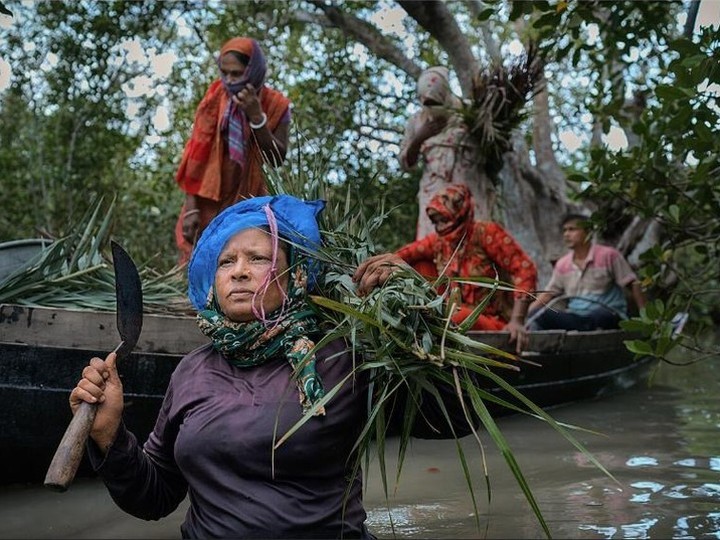
A working reference photograph is in place, captured from a freely-licensed Wikimedia Commons source. Women gathering forest produce by boat in the Sundarbans mangrove forest, Bangladesh, Mohammad Rakibul Hasan, CC BY 4.0, via Wikimedia Commons. Note: illustrates the Sundarbans mangrove-forest setting and its traditional gatherers; does not show honeycomb or honey extraction directly. Treat this as a placeholder for marketing purposes: exact licence terms should be re-verified on the Commons file page, and original producer photography is recommended before final trade use.