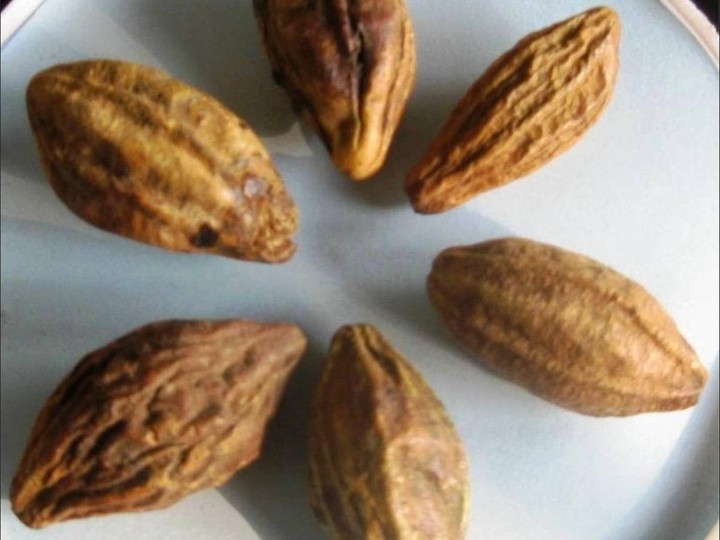
Triphala classical Ayurvedic formulation, wildcrafted
Three forest fruits, one ancient rebalancing formula, wild-gathered from Central India's sal forests.
| Origin | Triphala's three fruits (Terminalia chebula/haritaki, Terminalia bellirica/bibhitaki, Phyllanthus emblica/amla) are indeed traditionally wild-collected from Central Indian forest belts (Chhattisgarh's Dhamtari district is a documented collection hub), so the Central India claim is broadly accurate; however 'wildcrafted' should be qualified — a growing share of commercial amla and terminalia supply is now semi-cultivated/orchard-grown, and true wild collection quality varies significantly by season and collector practice, so batch-level wild-certification documentation is advisable rather than assuming uniform wild sourcing. |
| Indian subcontinent | Yes |
| Category | Ayurveda & Wellness Extracts |
| Retail price band | mid |
| Bulk / trade price band | wholesale tiered by kg with wild-collection certificate |
| Sourcing status | Dossier researched from public sources — producer contact not yet established |
| Compliance status | Preliminary review complete (see below) — not yet legally verified |
Detailed study
Triphala ('three fruits') combines dried Terminalia chebula, Terminalia bellirica and Phyllanthus emblica in classical 1:1:1 or Ayurveda-texted ratios; its tannins, gallic acid derivatives and vitamin-C-rich amla polyphenols underpin its reputation as a mild laxative, antioxidant and digestive rasayana. Distinctiveness comes from the synergistic astringent-sour-bitter profile the three fruits create together, which single-herb extracts cannot replicate.
Provenance & producer
Central Indian forest districts of Madhya Pradesh and Chhattisgarh (e.g., Dhamtari) are long-documented wild-collection zones where tribal and forest-fringe communities hand-harvest ripe fruit under seasonal Non-Timber Forest Produce (NTFP) permits. Collection is typically supplemented by minor-forest-produce cooperatives (like those under MP's MFP Federation) rather than large plantations, though cultivated orchard supply is increasingly blended into bulk commercial powder.
Market & pricing
Triphala is one of the most exported classical Ayurvedic formulations, sold globally as capsules, churna (powder) and tablets through both Ayurvedic-classical channels (AYUSH-licensed manufacturers) and mainstream nutraceutical/dietary-supplement retail (Amazon, iHerb, health food stores). Price positioning is typically low-to-mid on the spectrum, with wild-collected, single-estate or fair-trade-certified batches commanding a premium over generic blended powder.
Compliance & export
In India, Triphala churna/tablets fall under AYUSH Ministry classical-formulation licensing (no efficacy trial required for texted formulas) and FSSAI food-supplement rules if sold as a dietary product. In the US it is regulated as a dietary supplement under DSHEA (FDA) requiring structure-function disclaimers, not medical claims; the EU requires novel-food/food-supplement compliance and correct botanical labeling. No CITES or IUCN threatened-species restriction applies to any of the three fruits, but NTFP wild-collection permits and forest-produce transit passes should be verifiable for wild-sourcing claims.
Sources
- Wild harvesting of Amla fruits impact study, Dhamtari, Chhattisgarh
- Phytochemical variations in commercial Triphala powder
- Organic India: Sustainably Wildcrafting Triphala
Image status
A working reference photograph is in place, captured from a freely-licensed Wikimedia Commons source (File:Haritaki (Terminalia chebula) fruits.jpg). Represents haritaki, one of Triphala's three constituent fruits — a representative component image, not a full-blend product shot. Treat this as a placeholder for marketing purposes: exact licence terms should be re-verified on the Commons file page, and original producer photography is recommended before final trade use.