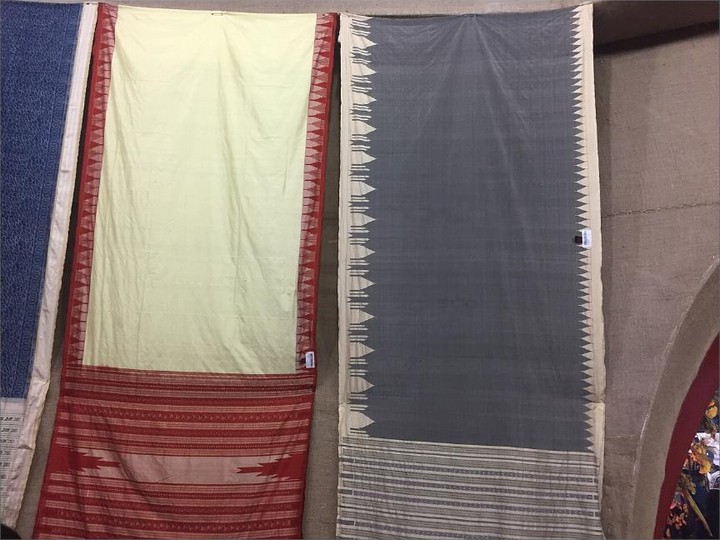
Tussar silk handloom textile, natural undyed
Wild-silk texture in its honest, undyed gold — woven on Bhagalpur's century-old handlooms.
| Origin | Bhagalpur, Bihar is the historic and legitimate home of the Tussar/'Bhagalpuri' silk weaving and finishing industry (100+ years old, ~30,000 handloom weavers, GI-protected as 'Bhagalpuri Silk'), but the bulk of raw tussar cocoon cultivation has shifted to neighbouring Jharkhand (and parts of Chhattisgarh/Odisha/West Bengal) in recent decades. Listings should describe Bhagalpur as the weaving/finishing origin rather than implying the raw silk is necessarily reared there. |
| Indian subcontinent | Yes |
| Category | Heritage Textiles & Weaves |
| Retail price band | premium |
| Bulk / trade price band | mid |
| Sourcing status | Dossier researched from public sources — producer contact not yet established |
| Compliance status | Preliminary review complete (see below) — not yet legally verified |
Detailed study
Tussar (tasar) is a wild silk reeled from cocoons of Antheraea silkmoths that feed on forest trees such as sal, arjun and oak, rather than the mulberry-fed Bombyx mori used for standard mulberry silk. The fibre is coarser and shorter-staple than mulberry silk, giving tussar its characteristic textured hand, natural deep-gold colour and matte sheen; the undyed/natural-tone version showcased here is prized precisely because it is left unbleached and unbleached-undyed, letting the wild-silk colour show through.
Provenance & producer
Bhagalpur, Bihar has been a tussar-weaving hub for over a century, home to an estimated 30,000 handloom weavers and holding a Geographical Indication registration for 'Bhagalpuri Silk.' A non-violent 'Ahimsa' or 'peace silk' variant, in which cocoons are boiled only after the moth has emerged, is also produced in this belt and increasingly marketed to ethical-fashion buyers.
Market & pricing
Natural undyed tussar occupies a premium niche above standard mulberry silk substitutes and appeals to buyers seeking visible, 'honest' texture and sustainable/undyed positioning — Indian ethnic-wear retailers, sustainable-fashion export brands, and home-textile curators (cushions, drapes) are core buyers, alongside wholesale garment makers who over-dye or block-print the base cloth.
Compliance & export
Because 'Bhagalpuri Silk' is GI-registered, trade use of that specific name should be limited to certified Bhagalpur-area production; generic 'tussar silk' claims are unrestricted but buyers increasingly expect Ahimsa/peace-silk claims to be substantiated. Silk exports require standard Indian customs textile documentation; importing countries generally have no special animal-fibre restrictions for silk (unlike wool/hair fibres), but US/EU textile labelling rules still require accurate fibre-content declaration (100% silk vs blends).
Sources
Image status
A working reference photograph is in place, captured from a freely-licensed Wikimedia Commons source. Tasar (tussar) silk sarees, natural undyed cream tussar silk with woven border, Sailesh Patnaik, CC BY-SA 4.0, via Wikimedia Commons. Treat this as a placeholder for marketing purposes: exact licence terms should be re-verified on the Commons file page, and original producer photography is recommended before final trade use.