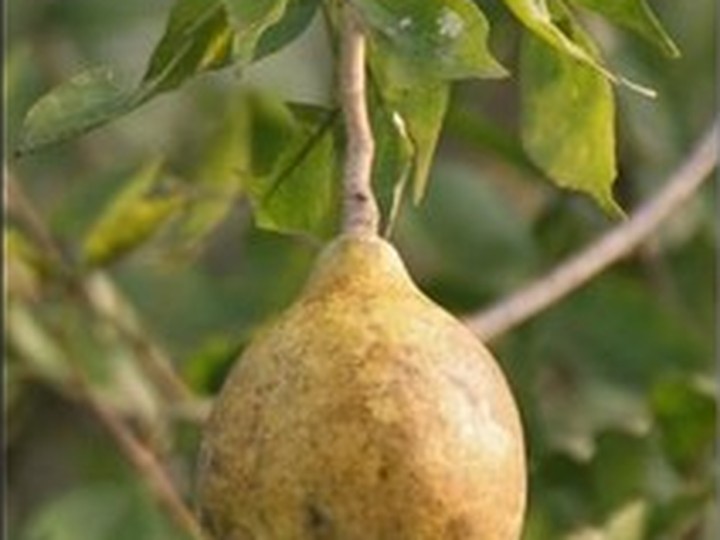
Wild Himalayan Bael (Aegle marmelos) fruit extract
The sacred golden apple of the Himalayan foothills — a fragrant digestive fruit revered for millennia.
| Origin | Aegle marmelos is widely distributed across the Indian subcontinent's sub-Himalayan tracts and plains, including Uttarakhand's foothill forests, so the Uttarakhand origin claim is plausible; however 'wild' should be qualified since Bael is also extensively cultivated as a sacred temple tree and orchard crop across India (commercially available cultivated varieties dominate the fruit-extract trade), meaning genuinely wild-Himalayan-foothill sourcing is a smaller, harder-to-verify niche within the broader Bael supply chain. |
| Indian subcontinent | Yes |
| Category | Ayurveda & Wellness Extracts |
| Retail price band | mid |
| Bulk / trade price band | wholesale, seasonal-harvest dependent |
| Sourcing status | Dossier researched from public sources — producer contact not yet established |
| Compliance status | Preliminary review complete (see below) — not yet legally verified |
Detailed study
Bael (Aegle marmelos) produces a hard-shelled, aromatic golden fruit whose pulp is rich in tannins, coumarins (marmelosin), flavonoids and mucilage, traditionally used for digestive and gut-health support and increasingly studied for antidiabetic and antimicrobial activity. The fruit is typically sun-dried and processed into shelf-stable powder or standardized extract, since fresh pulp is highly perishable and fibrous.
Provenance & producer
Native across the Indian subcontinent including sub-Himalayan foothill forests of Uttarakhand, Aegle marmelos grows both as scattered wild/naturalized trees in mixed deciduous forest and as a widely cultivated sacred tree planted near Shiva temples throughout India. Foothill communities in Uttarakhand traditionally forage fallen or hand-picked fruit seasonally (typically March–June), though large-volume commercial Bael extract supply chains draw substantially from cultivated orchard sources across multiple states, not exclusively wild Himalayan trees.
Market & pricing
Bael extract and powder serve both the Ayurvedic-classical digestive-formulation market (e.g., Bilva-based remedies) and the emerging global functional-food/nutraceutical space marketing it as a gut-health and blood-sugar-support botanical; pricing sits mid-tier, reflecting moderate but growing international demand versus still-limited large-scale standardized-extract manufacturing. Target buyers include Ayurvedic supplement brands, digestive-health nutraceutical formulators and Indian-diaspora food/beverage markets (Bael sherbet is a known functional beverage).
Compliance & export
No CITES or IUCN-threatened listing currently restricts Aegle marmelos trade, though sustainable wild-collection practices are still advisable given increasing commercial demand pressure on foothill forest populations. In India, Bael products are regulated under FSSAI food rules or AYUSH classical-drug licensing depending on positioning; for export as a dietary supplement or functional-food ingredient to the US/EU, standard FDA DSHEA / EU novel-food and food-supplement labeling rules apply, and marmelosin/coumarin content should be disclosed where relevant to safety assessments.
Sources
- IUCN species account, Aegle marmelos
- Aegle marmelos: a medicinal wild aromatic tree
- Bael: nutrient-rich functional fruit review
Image status
A working reference photograph is in place, captured from a freely-licensed Wikimedia Commons source (File:Bael (Aegle marmelos) fruit at Narendrapur W IMG 4099.jpg). Depicts Bael fruit; location shown is West Bengal rather than Uttarakhand specifically. Treat this as a placeholder for marketing purposes: exact licence terms should be re-verified on the Commons file page, and original producer photography is recommended before final trade use.