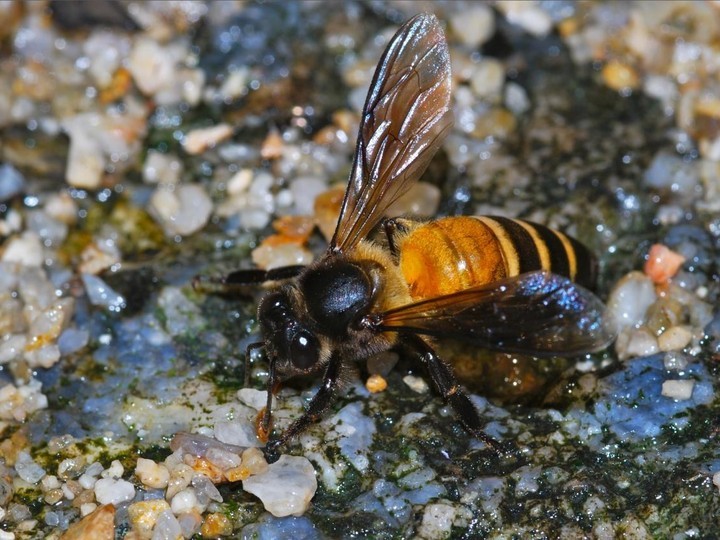
Wild Nilgiri cliff honey (Apis dorsata)
Harvested by Kurumba, Irula and Kattunayakan honey hunters rappelling down cliff faces in the Nilgiri Biosphere Reserve, this wild Apis dorsata honey is one of India's last truly foraged sweeteners.
| Origin | Nilgiri Hills, Tamil Nadu, India |
| Indian subcontinent | Yes |
| Category | Rare Spices, Botanicals & Teas |
| Retail price band | Retail: approx. Rs 700–1,200 per 500g jar for certified wild/forest honey from Nilgiris-based tribal cooperatives (Keystone Foundation's Last Forest Enterprises range) |
| Bulk / trade price band | Pricing under research |
| Sourcing status | Dossier researched from public sources — producer contact not yet established |
| Compliance status | Preliminary review complete (see below) — not yet legally verified |
Detailed study
Apis dorsata, the giant rock/cliff honey bee, builds single exposed combs on cliff faces and tall trees rather than in hives, making its honey a true wild-forage product that cannot be commercially apiaried. Nilgiri cliff honey is seasonal (typically two harvests a year tied to flowering cycles), has a darker colour and stronger, more complex flavour than Apis cerana or Apis mellifera honey, and quality is graded by moisture content, absence of adulteration, and comb maturity at harvest.
Provenance & producer
Harvesting is done by indigenous communities of the Nilgiri Biosphere Reserve — chiefly Kurumba, Irula, Kattunayakan and Kota groups — using traditional rope-and-torch techniques passed down through generations; the Keystone Foundation has documented and organised this honey-hunting economy since the 1990s and its social enterprise arm, Last Forest, markets certified wild honey from these collectives.
Market & pricing
Wild forest honey from Nilgiri tribal cooperatives retails in the low-to-mid three-figure range per 500g in India, commanding a premium over commercial apiary honey due to scarcity, seasonality, and traceable indigenous sourcing; Last Forest and similar enterprises report growing export interest in raw/wild honey.
Compliance & export
No GI tag currently covers this specific product; sale as packaged honey in India requires FSSAI licensing and compliance with the Food Safety and Standards (honey) regulations, including moisture and C4-sugar adulteration testing (NMR testing has become standard after 2020 adulteration controversies). Export to the EU/US requires compliance with each market's honey purity and residue-testing standards; forest produce collection also falls under Van Panchayat/Forest Rights Act frameworks.
Sources
- Keystone Foundation — Honey Portal, Honey Collection Methods
- 30 Stades — Last Forest takes honey & beeswax products to global markets
- Wikipedia — Kurumba people (India)
Image status
A working reference photograph is in place, captured from a freely-licensed Wikimedia Commons source (File:Rock Honeybee (Apis dorsata) (8730122355).jpg). Correctly identified as Apis dorsata (Rock/Giant honeybee); location of the photo itself is not confirmed as Nilgiris specifically, but the species match is genuine — check the file page for exact CC licence terms before use. Treat this as a placeholder for marketing purposes: exact licence terms should be re-verified on the Commons file page, and original producer photography is recommended before final trade use.